

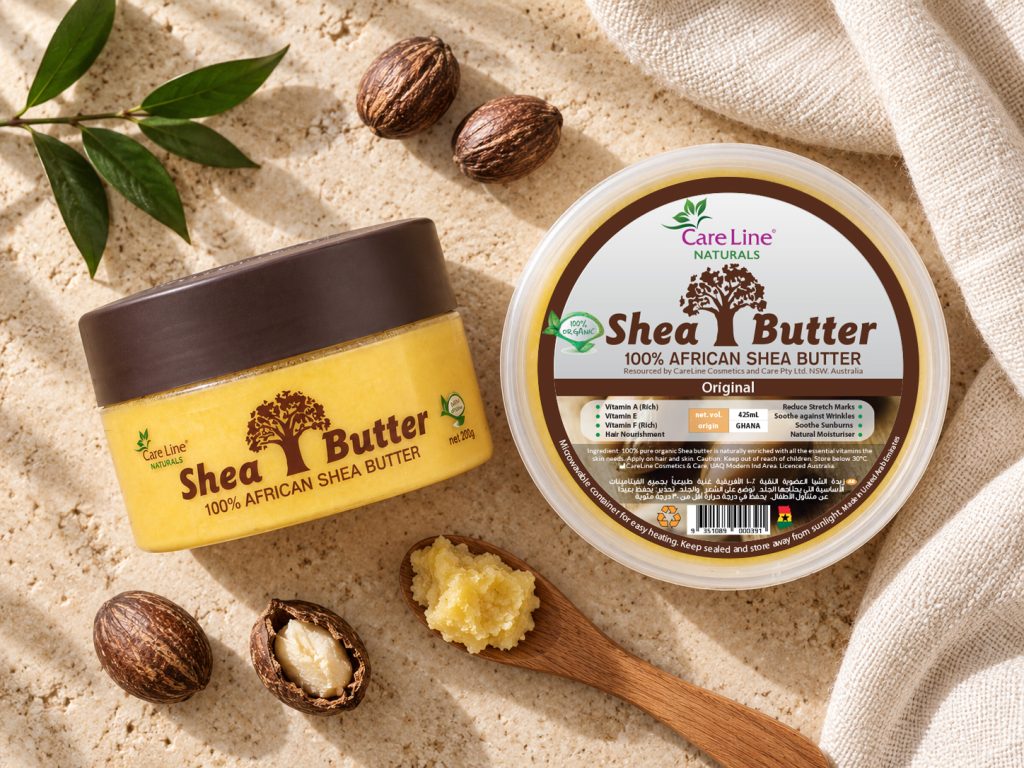
Among natural skincare ingredients, few have maintained the enduring global demand of shea butter. As beauty consumers across the world seek out ingredients that offer genuine skin barrier protection, shea butter remains one of the most searched, trusted, and versatile active lipids in personal care.
From cold, low-humidity conditions in Russia to Zambia’s extended dry seasons, consumers consistently reach for shea butter products to restore dry, damaged, or compromised skin. For beauty stockists and retail buyers looking to build a high-velocity body and facial care inventory, choosing well-formulated, stable products is essential. You can Shop shea butter-infused skincare from CareLine to offer your customers dermatologist-evaluated formulas that combine rich natural lipids with elegant, non-greasy textures.
To maximize retail sales, store owners and brand managers must understand the science behind shea butter, how it functions on the skin barrier, and why it continues to outperform synthetic alternatives in global markets.
The Dermatology of Shea Butter: Fatty Acid Profiles and Barrier Repair
Shea butter is extracted from the nuts of the Vitellaria paradoxa tree, native to Africa. What makes shea butter scientifically unique compared to other plant oils is its rich composition of essential fatty acids and unsaponifiable bioactive compounds.
Rather than simply sitting on top of the skin, high-grade shea butter interacts directly with the stratum corneum—the outermost layer of the skin barrier.
Key Active Components and Their Functions
| Fatty Acid / Bioactive | Percentage Range | Primary Dermatological Function |
| Oleic Acid (C18:1) | 40% – 55% | Deeply moisturizes, softens dry tissue, and enhances ingredient absorption. |
| Stearic Acid (C18:0) | 35% – 45% | Provides rich occlusive protection, preventing transepidermal water loss (TEWL). |
| Linoleic Acid (C18:2) | 3% – 8% | Supports barrier repair, reduces inflammation, and balances sebum production. |
| Cinnamic Acid Esters | 1% – 3% | Delivers natural anti-inflammatory benefits and mild UV-absorbing properties. |
Occlusive vs. Moisturizing: How Shea Butter Functions
It is common for consumers to confuse hydrating ingredients with occlusive ingredients. Water-based ingredients (like glycerin or hyaluronic acid) attract moisture into the skin. However, without an occlusive agent to lock that moisture in, water quickly evaporates into dry air.
Shea butter functions primarily as a rich emollient with occlusive properties. Its high concentration of stearic and oleic acids creates a semi-permeable protective barrier over the skin. This seals in existing moisture, calms surface irritation, and helps maintain a more comfortable environment for dry or compromised skin.
Myth-Busting: Setting the Record Straight for Retail Shoppers
Despite its global popularity, several persistent myths surrounding shea butter can create confusion at the retail counter. Educating store staff on these points helps build trust with consumers.
Myth 1: “Shea Butter Clogs Pores and Causes Acne”
- The Reality: Raw or poorly formulated thick oils can feel heavy, but pure shea butter has a low comedogenic rating (typically rated 0 to 2 on a 5-point scale). Because its fatty acid profile mimics the skin’s natural lipids, shea butter absorbs effectively without clogging pores when formulated correctly. It is particularly beneficial for dry, compromised, or eczema-prone skin types that lack natural sebum.
Myth 2: “Refined Shea butter is Always Better than Unrefined Shea Butter”
- The Reality: Refined and unrefined shea butter serve different product strategies. Refining can provide greater consistency in colour and odour, while unrefined shea butter retains more of its original sensory characteristics and naturally occurring unsaponifiable components. CareLine Naturals offer 100% unrefined African shea butter in multiple retail formats, allowing distributors to position the product around purity, versatility and concentrated natural moisturization.
Regional Market Opportunities: Zambia and Russia
The global demand for shea butter manifests differently depending on regional climate conditions and local consumer habits.
Russia: Winter Moisture and a Growing Natural Beauty Market
Harsh freezing temperatures, bitter winds, and aggressive indoor heating systems severely strip the skin’s natural lipid barrier, leading to cracking, redness, and extreme dryness. Russia presents a strong commercial environment for intensive moisturizing products, particularly during cold-weather periods when low outdoor temperatures and heated indoor environments can increase skin dryness and discomfort. The commercial opportunity extends beyond climate. Russia’s natural cosmetics market was estimated at approximately US$451 million in 2025 and is forecast to grow at around 7.1% annually through 2030. Meanwhile, Russia’s overall cosmetics and fragrance market reached ₽1.433 trillion in 2025, up 8.3% in current prices. For retailers, rich body moisturisers, hand care, multipurpose butters and products targeting very dry skin therefore provide a natural category fit for winter merchandising.
Zambia: Dry-Season Moisture and an Emerging Beauty Opportunity
Zambia offers a very different use case from Russia. The country experiences pronounced dry seasons, including a cool dry period from May to mid-August followed by a hot, dry season through approximately mid-November. These seasonal conditions create a relevant positioning opportunity for rich body moisturisers and multipurpose products designed to maintain skin softness and comfort. For Zambian distributors, the opportunity is to offer a convenient, quality-controlled and retail-ready format of a familiar African botanical ingredient, supported by clear product documentation and consistent packaging,
Why CareLine Naturals Shea Butter Offer Retail Flexibility
CareLine Naturals Shea Butter is built around a simple proposition: 100% African shea butter in an unrefined format designed for multipurpose skin care. Rather than diluting the ingredient into a conventional lotion, the product provides concentrated shea butter that can be used on dry hands, elbows, knees, feet and other rough areas.
The range is available in 100g, 200g and 500g formats, giving distributors flexibility across personal-use, family-size and value-oriented retail positioning. For retail partners, this creates opportunities for year-round body care, winter moisturisation, natural skincare merchandising and multipurpose-care positioning.
One Ingredient, Two Very Different Retail Opportunities
| 🇷🇺 Russia | 🇿🇲 Zambia | |
| Primary opportunity | Intensive winter moisturisation | Dry-season body moisture |
| Retail positioning | Rich body care, hands, feet, very dry skin | Multipurpose natural body care |
| Market signal | Natural cosmetics projected ~7.1% CAGR 2025–2030 | Emerging regulated cosmetics market |
| Consumer story | Natural ingredient + intensive moisture | African-origin ingredient + versatile moisture |
| Distributor consideration | EAEU TR CU 009/2011 compliance | ZAMRA Marketing Authorisation |
| CareLine opportunity | Winter/body-care merchandising | Everyday/multipurpose body care |
The Russia market-growth figure comes from Statista, while the regulatory requirements come from the applicable EAEU technical regulation. Zambia’s Marketing Authorisation requirement is confirmed directly by ZAMRA.
Conclusion
Shea butter remains a cornerstone ingredient in the global skincare industry because it is backed by real dermatological science, exceptional barrier-repair capabilities, and universal consumer trust. Whether shielding consumers from freezing winter weather in Russia or soothing sun-exposed skin in Zambia, shea butter products address fundamental skin health needs across every demographic.
For distributors, the opportunity lies not only in the ingredient itself, but in selecting quality-controlled, well-documented products that can be adapted to local climate, regulatory requirements and retail formats. CareLine Naturals 100% African Shea Butter provides a simple, versatile SKU that can support this positioning across multiple markets.
Frequently Asked Questions (FAQs)
Is shea butter suitable for sensitive skin?
Yes. Pure, refined shea butter is naturally hypoallergenic and contains anti-inflammatory cinnamic acid esters that help soothe irritated, sensitive, or eczema-prone skin. Because it contains no harsh chemical additives when properly formulated, it is exceptionally gentle on delicate skin barriers.
What is the difference between body butter and daily lotion containing shea butter?
Body butter contains a higher concentration of shea butter and lipids, resulting in a thick, rich texture designed for intense overnight moisture or extremely dry areas like elbows, knees, and feet. Daily lotions contain a higher ratio of water and lighter emollients mixed with shea butter, allowing for rapid absorption and lightweight daytime use.
Why do some raw shea butter products feel grainy on the skin?
Graininess occurs when raw shea butter is melted and cools down too slowly, causing the different fatty acids (stearic and oleic) to crystallize at different temperatures. Professional manufacturing controls the heating and rapid cooling process precisely, ensuring the finished product maintains a permanently smooth, creamy texture.