

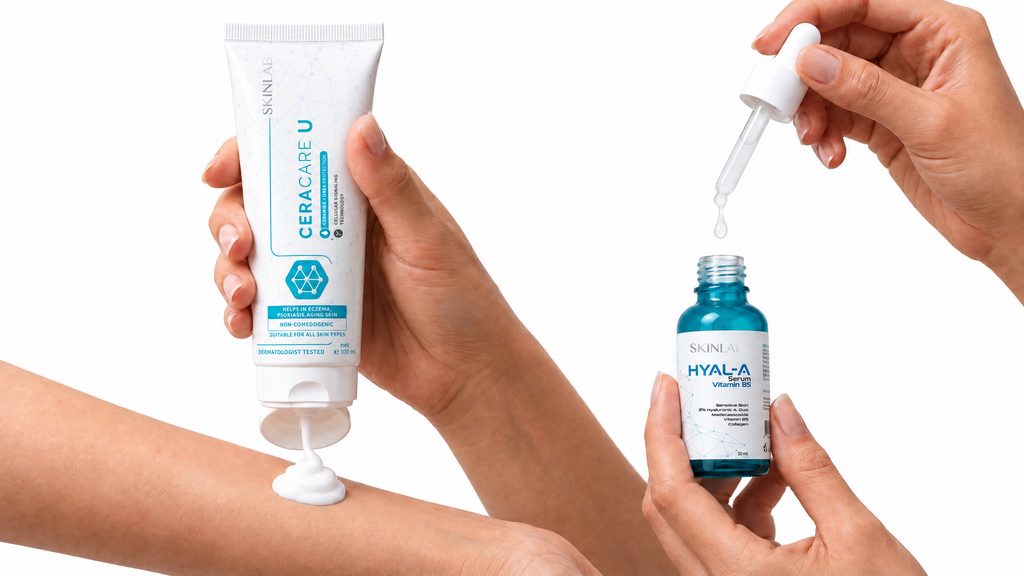
A great ingredient only works if it survives the bottle and reaches the skin. That is what delivery technology does: it protects an active from light, air and heat, carries it through the skin barrier and releases it at the right depth, at the right pace.
Retinol. Vitamin C. Niacinamide. Peptides. Hyaluronic acid.
Today’s best-selling skincare products all seem to share the same hero ingredients.
So why does one formula visibly transform the skin while another barely makes a difference?
The answer isn’t on the ingredient list.
It’s delivery.
For beauty entrepreneurs and established brands looking for a skincare manufacturer, a cosmetics contract manufacturing partner or a private label skincare supplier, this is where a good formula becomes a high-performance, clinically credible product.
Advanced delivery systems such as liposomes, nanoemulsions and encapsulation improve active ingredient stability, boost skin penetration and support long-lasting efficacy. That matters even more for brands launching in demanding climates like Brazil and Vietnam.
A reliable OEM/ODM skincare partner doesn’t just fill bottles. It engineers formulas that deliver results.
The Barrier Problem: Most Actives Struggle to Get In
Think of your skin as a very strict security guard.
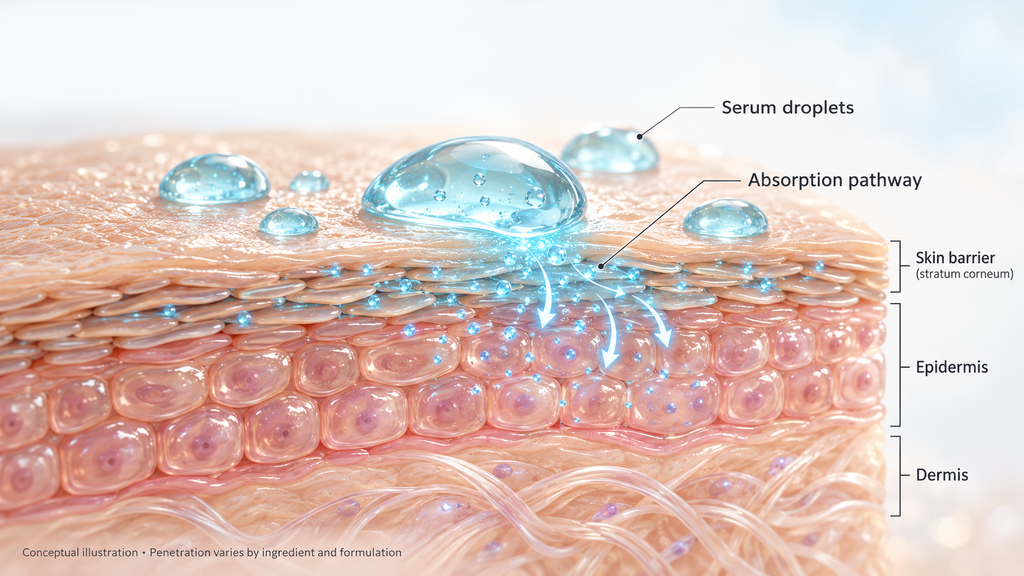
The outermost layer, the stratum corneum, has one job: keep the outside world out. That is great for blocking pollution and germs. It also turns away many of the ingredients brands pay the most for.
Researchers describe this with the “500 Dalton rule” (Bos & Meinardi, Experimental Dermatology, 2000). Molecules larger than roughly 500 Da rarely cross intact skin in meaningful amounts. Many celebrated actives are bigger than that, including hyaluronic acid, many peptides and collagen fragments.
So a premium serum can have an impressive ingredient list and still leave its star ingredient waiting outside.
Stability: The Hidden Loss Inside the Jar
Some ingredients never reach the skin at full strength. They start losing potency before the customer opens the bottle.
Many popular actives behave the same way:
• Retinol: breaks down when exposed to light, oxygen and heat.
• L-ascorbic acid (vitamin C): oxidises quickly in water-based formulas, often turning yellow or orange as it degrades.
• Peptides and antioxidants: can lose activity when pH or temperature shifts, which is common in warm climates and on long shipping routes.
The result is a product that looks perfect on the shelf but underdelivers on the skin.
Smart formulation can change that. Lin et al. (Journal of Investigative Dermatology, 2005) found that adding ferulic acid to a vitamin C and E solution stabilised the formula and roughly doubled its photoprotection.
Same ingredients. Different formulation. Very different result.
Encapsulation approaches such as liposomes, polymer microspheres and cyclodextrin complexes are widely studied for the same purpose: shielding sensitive ingredients like retinoids from light and air until they are released on the skin.
For a skincare manufacturer, this protection is what makes the last bottle in a batch perform like the first.
Key Delivery Technologies to Ask Your Partner About
Not every delivery system does the same job.
| Technology | What it does | Best for |
| Liposomes | Phospholipid vesicles that mimic skin lipids and carry both water and oil-soluble actives | Hydration, anti-aging, sensitive skin |
| Nanoemulsions | Ultra-fine droplets that spread evenly and improve active distribution | Lightweight serums, tropical-climate textures |
| Niosomes/ lipid nanoparticles (SLN/NLC) | Stable lipid carriers that support controlled release | Sunscreens, brightening, repair |
| Penetration-supporting systems | Fatty-acid and glycol-based carriers that help move actives through the barrier | Targeted treatments |
Studies on lipid-based nanocarriers (reviewed widely in the International Journal of Pharmaceutics and the Journal of Cosmetic Dermatology) report improved skin hydration, deeper active retention in the epidermis and less irritation than the same actives in conventional emulsions. Results vary by formula. So always ask for supporting test data, not just claims.
How Careline Approaches It
At Careline, formulation goes beyond choosing trending actives.
Our R&D focuses on how each ingredient is stabilised, delivered and proven, so your brand can launch skincare that performs in real conditions, from São Paulo’s heat to Ho Chi Minh City’s humidity.
Whether you are developing a private label skincare line, a custom OEM/ODM formula or an export-ready range, we help you turn a good ingredient list into measurable results.
Ingredients earn attention. Delivery earns results.
When choosing a cosmetics partner, ask how the formula works, not just what it contains.
Ready to build a high-performance skincare line for global markets? Tell us about your project and let’s find the right formula for your market.
Why This Matters in Brazil and Vietnam
Delivery technology matters most where climate, consumer expectations and competition are demanding.
Brazil is consistently ranked among the world’s largest beauty and personal care markets (Euromonitor and Statista place it in the global top five). Consumers are ingredient-savvy and face high heat, humidity and strong UV. Formulas must stay stable at high temperatures and feel light on the skin. Products also need to comply with ANVISA regulations.
Vietnam is one of Southeast Asia’s fastest-growing skincare markets, driven by a young, digitally connected consumer base and strong demand for brightening, sun protection and skin-barrier products (industry reports estimate high-single to double-digit annual growth). Hot, humid conditions and long shipping routes make thermal stability and non-greasy textures essential.
Products must meet ASEAN Cosmetic Directive and local notification requirements.