

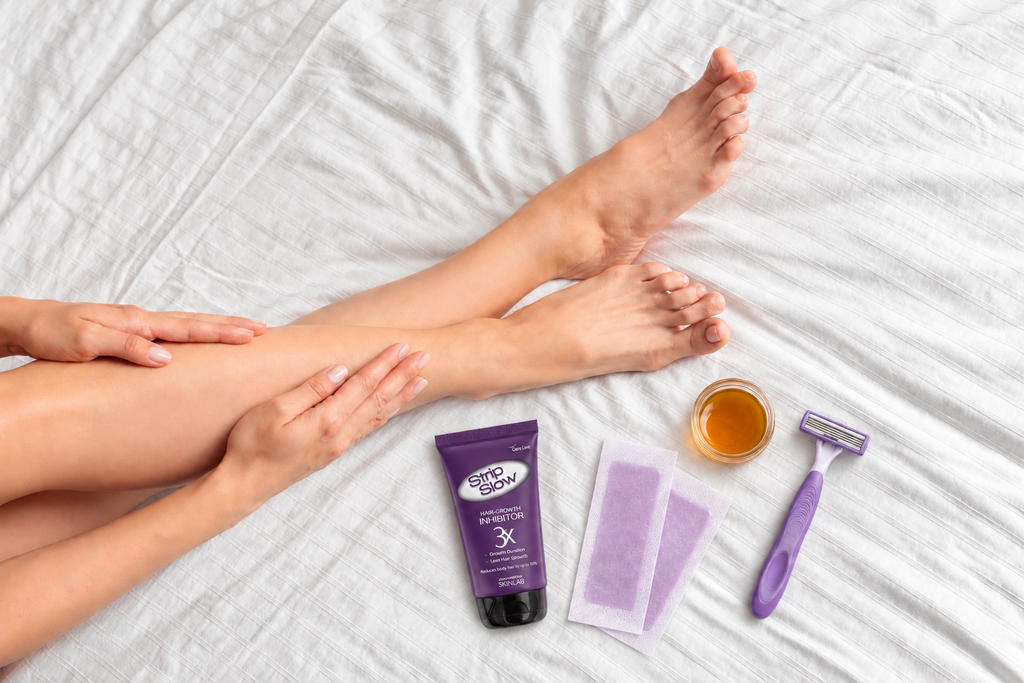
You’ve just waxed. Your skin feels smooth, and you expect it to last. Then, a week or two later, the stubble creeps back. It’s one of the most common beauty frustrations, and the reason lies in how hair grows.
If you’ve ever wondered, “Why is my hair growing back already?”, you’re not alone. From patchy leg hair to visible underarm regrowth, maintaining smooth skin can feel like an ongoing appointment.
Understanding hair regrowth after waxing starts beneath the surface—with the hair growth cycle. Here’s why hair returns at different times, what influences your results and where post-wax aftercare fits in.
How hair grows: the four-stage cycle
Once the old hair has shed, the follicle starts over with a new anagen phase, and the cycle repeats.
Your hairs aren’t all in the same phase at once. When you wax, you remove the hairs that have surfaced, but the ones still resting or forming beneath the skin appear later. That’s why regrowth comes back in waves, not all at once.
This window is the perfect moment for aftercare. Calming the skin and supporting slower, finer regrowth can make the time between sessions more comfortable and your results last longer.
Why hair is different around the world
Genetics, hormones, and ancestry all affect how thick, dark, curly, and fast-growing your hair is. These are general trends, not rules, and individual hair varies everywhere.
Brazil has a very diverse population, so hair types cover everything from fine and straight to coarse and tightly curled. Curlier hair is more likely to turn back into the skin as it grows, which can cause ingrown hairs. Deeper skin tones can also be more prone to dark marks after irritation, so gentle aftercare is especially useful. With warm weather and beach culture, many people want smooth skin that stays comfortable.
Vietnam and much of Southeast Asia often see dark, straight, relatively fine body hair. There may be less of it, but dark hair against lighter skin tends to stand out, so regrowth shows up as visible shadow even when the hair is fine. Heat, humidity, and sun can also make freshly treated skin more sensitive.
Different hair, same goal: keep skin smooth, calm, and comfortable for as long as possible.
Recommended ways to reduce body hair growth
- Topical hair inhibitor creams
Inhibitor creams are applied after hair removal to help slow the rate, thickness, and density of regrowth. They’re easy to add to a daily routine and need no appointments or equipment.
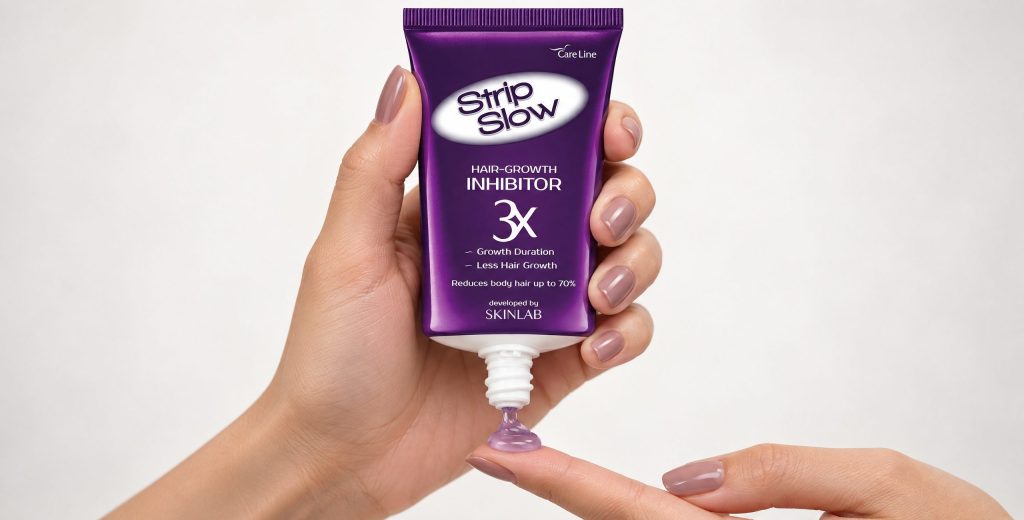
CareLine StripSlow™ is our top pick in this category. It’s a post-wax cream for use after waxing, tweezing, or other root-based hair removal, and it’s suitable for men and women, on any body area, and for sensitive skin.
The actives behind it:
• Telocapil™: a hair growth inhibiting active included to help slow regrowth
• Cyperus rotundus essential oil: a botanical oil traditionally associated with reducing hair growth
• Pseudoalteromonas Ferment Extract: a marine-derived ferment that supports the formula’s slower-regrowth action
Supporting ingredients:
• Chamomile extract and beta-glucan soothe and hydrate the skin
• Lactic acid gently exfoliates to help keep skin smooth
• Doesn’t clog pores or interfere with perfumes or aftershaves
Advanced biotechnology, built for every phase
Most inhibitor creams rely on a single approach, so they only work on part of the story. Hair grows in stages, and a formula that targets just one leaves the rest of the cycle unchecked.
StripSlow™ is different. Its advanced biotechnology formulation combines multiple hair growth inhibiting actives, including Telocapil™, Cyperus rotundus essential oil and a biotechnology-derived marine ferment, in one cream. Together, they’re designed to work across all phases of the hair growth cycle, so regrowth is slower, finer and softer from the moment hair starts to return.
That means more than a surface-level fix. It’s a complete approach to keeping skin smoother for longer.
Regular use can lead to up to 50% lower hair density, up to 30% shorter hair length, and up to 70% less overall growth. Results vary depending on your hair type, the area treated, and how consistent you are.
2. Root removal (longer-lasting results): waxing, sugaring, and epilating
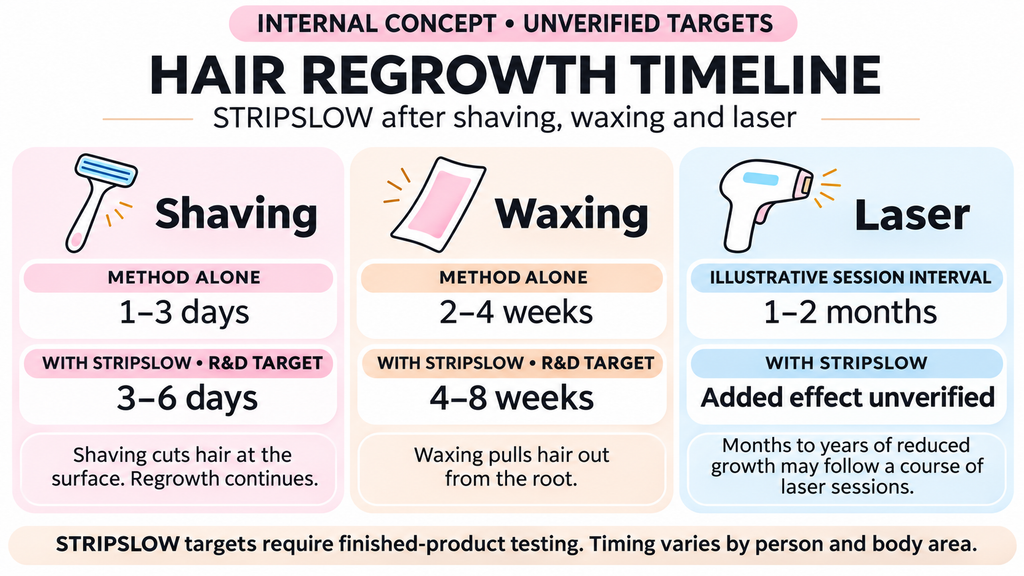
Waxing, sugaring, and epilating remove hair from the root, so skin stays smooth longer than with shaving, where stubble can appear within 1 to 3 days. But the results are temporary. The follicle is still there, so hair usually regrows within 3 to 6 weeks, depending on your hair growth cycle, hormones, and the body area.
Every regrowth means another session, more time, and more cost. A post-removal inhibitor cream like StripSlow™ helps slow regrowth, so you can stretch the time between appointments.
3. Long-term and permanent reduction: laser hair removal, IPL, and electrolysis
Laser, IPL, and electrolysis are professional treatments that target the follicle for longer-lasting reduction. Regrowth timelines vary more with these methods:
- Laser and IPL: after a full series of sessions, hair may stay away for several months to a few years, and what comes back is usually finer and sparser. Hormones, genetics, and dormant follicles can bring hair back over time, so touch-ups are common.
- Electrolysis: treated follicles are destroyed, but new hairs can still appear from follicles that were dormant during treatment, which is why it takes many sessions.
Using an inhibitor cream like StripSlow™ between sessions supports slower, finer regrowth, which can help you keep smooth skin longer and cut down on clinic visits.
A few tips for any routine:
- Add a hair growth inhibitor: after every hair removal session, make an inhibitor cream like StripSlow™ part of your routine. Apply it 3 times on the day of removal and the day after, then morning and evening until your next session. Consistency is what supports slower, finer regrowth over time.
- Be consistent: the hair cycle runs on its own timeline, so steady habits beat one-off efforts.
- Be gentle: freshly treated skin is sensitive, so skip harsh scrubs, heat, and tight clothing for a day or two.
- Moisturise: well-hydrated skin is more comfortable and less prone to ingrowns.
- Know your skin: always patch test, and check the ingredient list if you’re sensitive to lanolin, citrus, chamomile, or botanical oils.
The takeaway
Hair regrowth is natural, and it looks different for everyone, from the fine dark hair common in Vietnam to the wide range of textures found across Brazil. The good news is you have options: a daily inhibitor cream, longer-lasting root removal, or professional treatments for long-term reduction.
For an easy first step, add a post-removal routine to what you already do.